CURRENT ISSUE
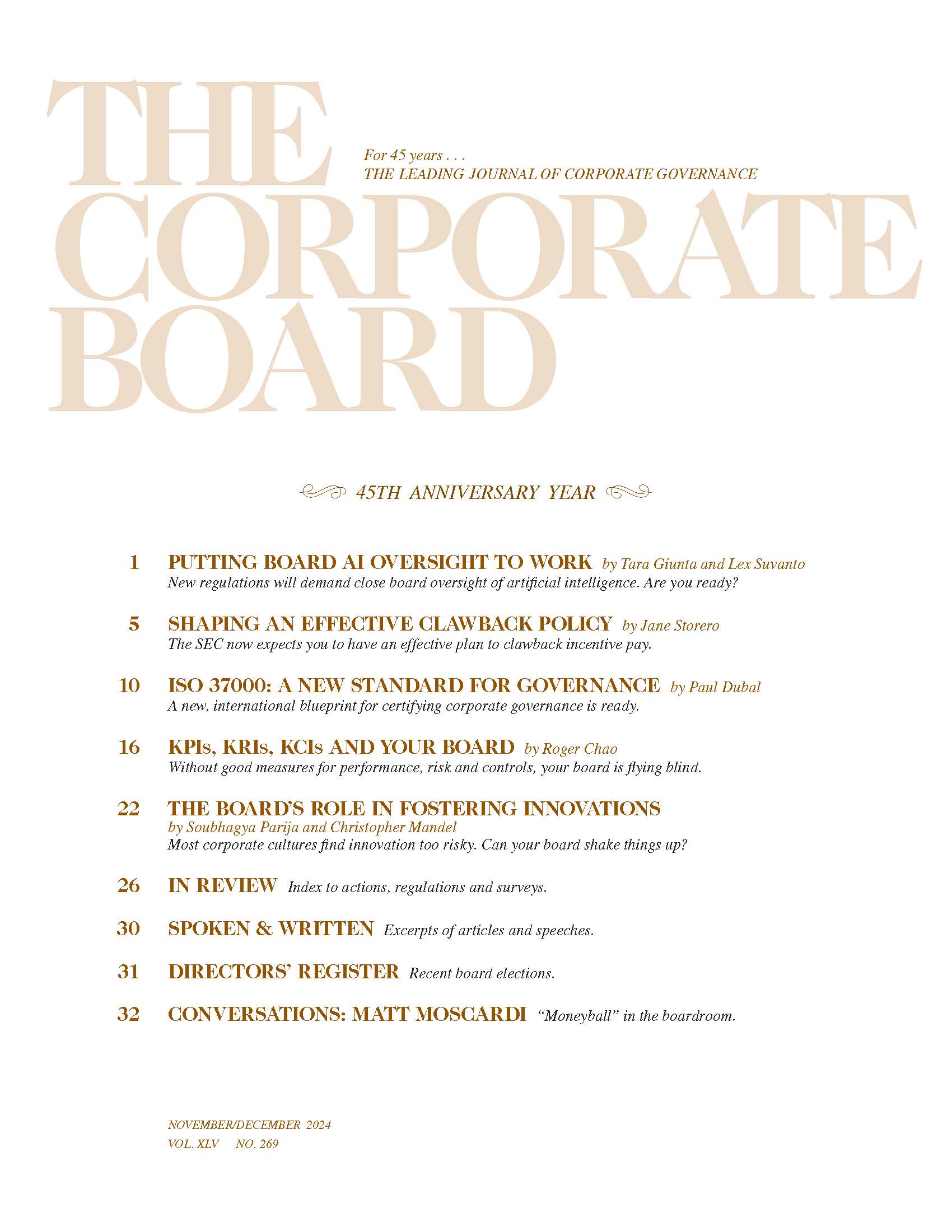
May/June 2025 - Vol. XLVI No. 272
Mastering Board Leadership Succession
By Gillian Lansdowne
The chair role is both the most — and least — formal position in governance.
Strong Middle Management = Strong Governance
By Mark Watson
Middle managers are the front-line leaders your board taps for success.
Antitrust and Mergers in the New Trump Era
By Andrew Goodman, James Brown, and Kuai Yu
Overall, expect lighter M&A regulations — but with surprises.
Driving Ethical AI Governance
By Kyriakos Lambros
How does a board balance its technical oversight with deeper ethical concerns?
The “Gift of Scars”
By Robyn Weatherley
The best advice on doing the board role right comes from those who have seen it go wrong.
LAST ISSUE
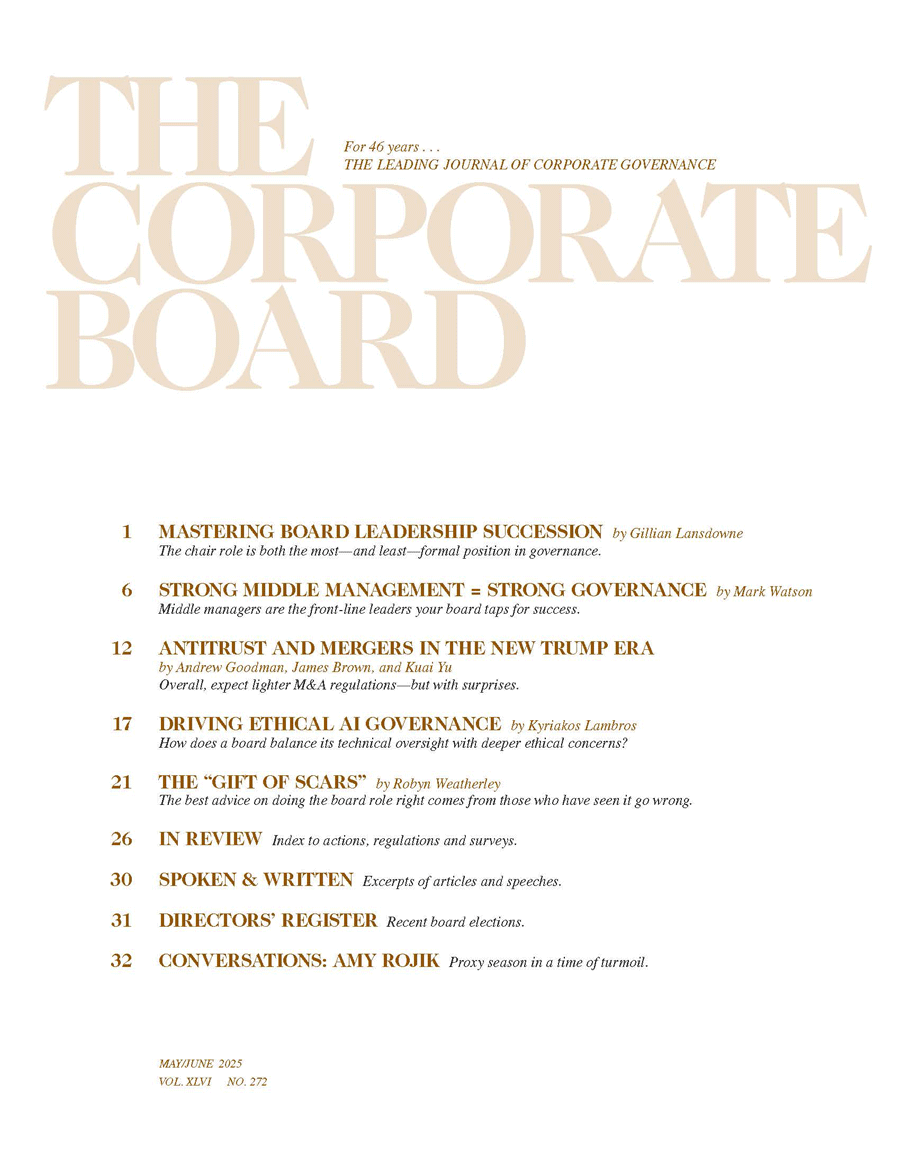
March/April 2025 - Vol. XLVI No. 271
Action Items For Proxy Season 2025
By Brian V. Breheny, Raquel Fox, and Page Griffin
Surging support for governance proposals, more “no action” requests… are you ready?
Independent Board Directors and Private Equity
By Dennis Cagan
The “members only” view toward PE boards is evolving.
Diverse Dialogue: A Board’s Secret Weapon
By Lieke Bos and Alice Breeden
Is your boardroom inclusive for the differing types of directors?
The Future of Board Committees
By Jamie. C. Smith
Time to shake up their charters (and maybe the committees themselves).
Chevron, Cyber, AI and Your Board
By Ilona Cohen
Overturning U.S. “Chevron deference” is only one regulatory change boards face now.
PREVIOUS ISSUE
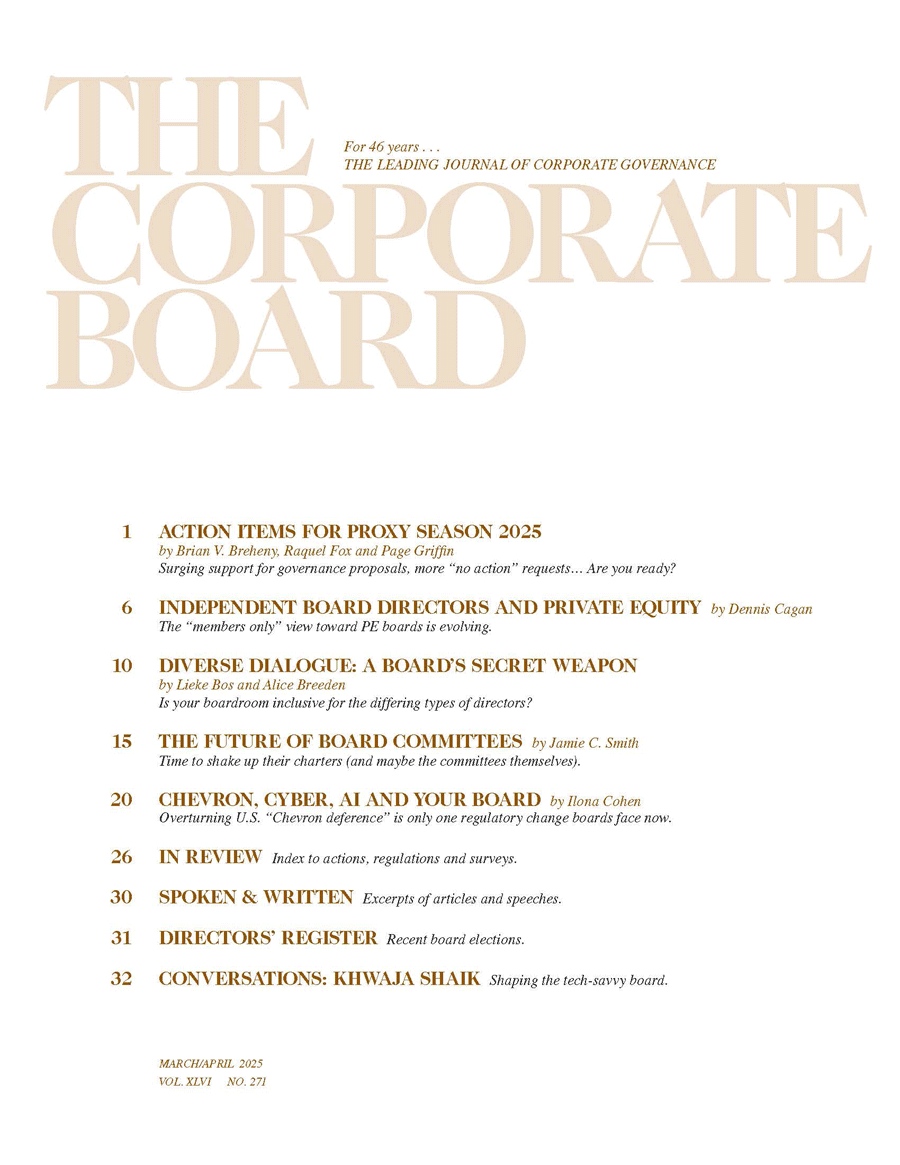
January/February 2025 - Vol. XLVI No. 270
Succeeding With CEO Succession
By Claudius Hildebrand
What are the five stages in a CEO’s career (and how does the board manage them for success)?
Time for An In-House Counsel To Join Your Board?
By Kyhm Penfil
The skills sought for director excellence can be found in another company's corporate counsel’s office.
A Vision for Board Cybersecurity Governance
By Lee Parrish
Your board will soon be required to prove effective cyber oversight. Are you ready?
Dangers in Director Resignation
By Asaf Eckstein and Ziv Granov
A board member quits in a huff. What are the dangers, and what must you disclose?
How Do Boards Put Sustainability Into Action?
By Amy Brachio and Sharon Sutherland
Corporate commitments are easy. The sustained follow through is the tough part.
PREVIOUS ISSUE
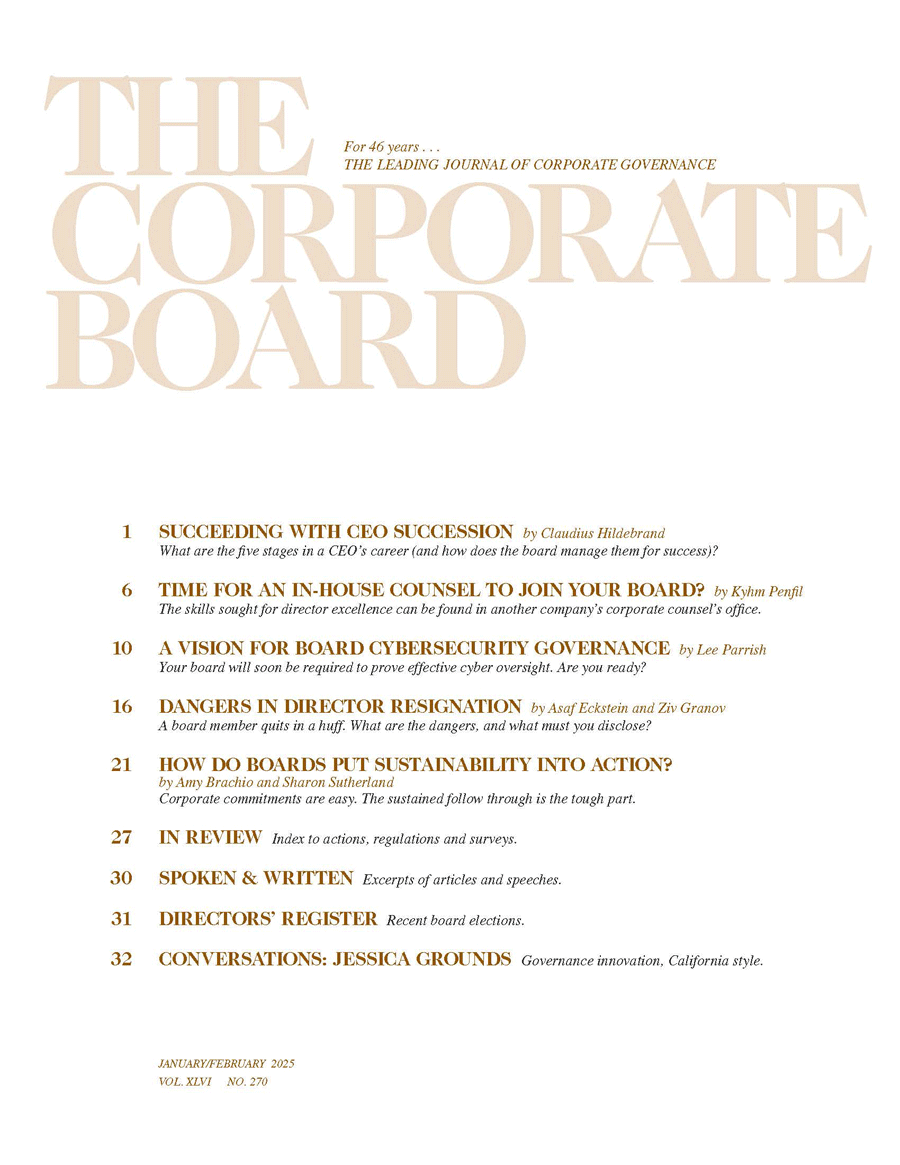
November/December 2024 - Vol. XLV No. 269
Putting Board AI Oversight to Work
By Tara Giunta and Lex Suvanto
New regulations will demand close board oversight of artificial intelligence. Are you ready?
Shaping an Effective Clawback Policy
By Jane Storero
The SEC now expects you to have an effective plan to clawback incentive pay.
ISO37000: A New Standard for Governance
By Paul Dubal
A new, international blueprint for certifying corporate governance is ready.
KPIs, KRIs, KCIs and Your Board
By Roger Chao
Without good measures for performance, risk and controls, your board is flying blind.
The Board's Role in Fostering Innovations
by Soubhagya Parija and Christopher Mandel
Most corporate cultures find innovation too risky. Can your board shake things up?